

When it comes to measuring tapes, two of the most commonly used materials are metal and plastic. As a seasoned measuring tape supplier, I've witnessed firsthand the distinct characteristics of each type and understand how these differences can significantly impact your measuring tasks. In this blog, I'll delve into the disparities between metal and plastic measuring tapes, exploring their construction, performance, and ideal applications.
Construction and Durability
The first major difference lies in their construction materials. Metal measuring tapes, typically made from steel or stainless - steel, are renowned for their robustness. The metallic core provides high tensile strength, allowing them to withstand significant pulling forces without breaking. This durability makes them suitable for heavy - duty use in construction sites, industrial settings, and outdoor environments where they may be subject to rough handling, abrasion, and exposure to the elements.
On the other hand, plastic measuring tapes are usually crafted from materials like polycarbonate or PVC. These materials are lightweight and flexible, which gives the tapes a certain degree of bendability without cracking. However, they are generally not as strong as their metal counterparts. Plastic tapes are more prone to tearing or breaking if overstretched or exposed to sharp objects. But for less strenuous applications, such as home use or light - duty crafts, their construction is often sufficient.
Measuring Accuracy
Accuracy is a crucial factor in any measuring tool. Metal measuring tapes are known for their high precision. The smooth and rigid surface of the metal blade allows for clear and accurate markings. The manufacturing process of metal tapes can achieve very tight tolerances, ensuring that the measurements are reliable. In professional fields like architecture, engineering, and carpentry, where precise measurements are non - negotiable, metal tapes are the go - to choice.
Plastic measuring tapes also offer a reasonable level of accuracy for most common tasks. However, over time, the plastic material may expand or contract due to changes in temperature and humidity. This can lead to slight variations in the measured length, especially in extreme environmental conditions. So, while they are fine for general household measuring, they may not be the best option for applications that demand high - precision measurements.
Readability
Readability of the markings on a measuring tape is another important aspect. Metal measuring tapes often have markings that are engraved or printed with high - contrast colors. The smooth surface of the metal provides a good backdrop for clear and visible markings. Some metal tapes also feature anti - glare coatings, which make it easier to read the measurements even in bright sunlight.
Plastic measuring tapes can also have well - defined markings. Many plastic tapes are made with translucent or semi - transparent materials, which can be an advantage in some situations. For example, a Transparent Shelf Measuring Tape allows you to see the surface beneath the tape while measuring, which is useful when you need to align the tape with a specific point on an object. However, the markings on plastic tapes may fade over time, especially if exposed to sunlight or chemicals, reducing their readability.
Flexibility and Ease of Use
Flexibility plays a significant role in how easy a measuring tape is to use. Metal measuring tapes, despite their rigidity, have a certain degree of flexibility that allows them to be coiled up neatly in a case. However, they can be a bit stiff when uncoiling, especially if they are of a thicker gauge. This can make them a bit cumbersome to handle in tight spaces.

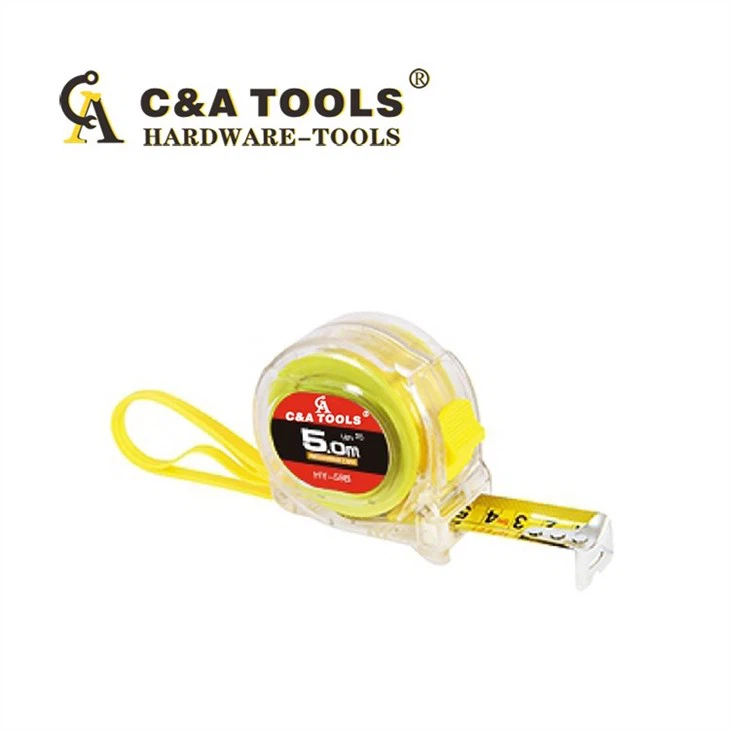
Plastic measuring tapes are extremely flexible. They can be easily bent and maneuvered around corners and curves, making them ideal for measuring irregularly shaped objects. Their lightweight nature also makes them more comfortable to hold and use for extended periods. For tasks like measuring the circumference of a circular object or the length of a curved surface, a plastic tape is often the more convenient option.
Cost
Cost is always a consideration when choosing a measuring tape. Metal measuring tapes generally cost more than plastic ones. The raw materials, manufacturing processes, and the high - precision engineering involved in making metal tapes contribute to their higher price tag. However, considering their durability, accuracy, and suitability for professional use, the investment is often justified for those who rely on measuring tapes in their daily work.
Plastic measuring tapes are much more affordable. They are a great option for consumers on a budget or for occasional home use. You can purchase a decent - quality plastic measuring tape at a fraction of the cost of a metal one, making them accessible to a wide range of users.
Ideal Applications
Based on the above differences, each type of measuring tape has its own set of ideal applications.
Metal Measuring Tapes:
- Construction sites: For measuring distances during building construction, laying foundations, or installing structural components.
- Industrial manufacturing: In factories, metal tapes are used to measure parts and ensure proper assembly.
- Outdoor surveying: Their durability and accuracy make them suitable for measuring large outdoor areas. For those who need a reliable tape for outdoor work, our Outdoor Tape Measure is a great option.
Plastic Measuring Tapes:
- Home improvement projects: Such as measuring for furniture placement, hanging pictures, or sewing.
- Arts and crafts: For measuring fabric, paper, or other craft materials.
- Educational purposes: In schools or training programs, plastic tapes are often used to teach basic measuring skills due to their affordability and ease of use.
Special Features
Some measuring tapes come with special features that can enhance their functionality. Metal measuring tapes may have features like a triple - stop mechanism. A Triple Stop Measuring Tape allows you to lock the tape at multiple positions, which is very useful when you need to take multiple measurements in succession without having to re - extend the tape each time.
Plastic measuring tapes can also have unique features. Some plastic tapes are designed with a retractable mechanism that is very quiet, which can be beneficial in situations where noise is a concern, such as in a library or a sleeping baby's room.
Conclusion
In conclusion, both metal and plastic measuring tapes have their own strengths and weaknesses. Metal measuring tapes are the preferred choice for heavy - duty, high - precision applications, thanks to their durability, accuracy, and reliability. Plastic measuring tapes, on the other hand, are more suitable for light - duty, general - purpose use, offering flexibility, affordability, and ease of use.
As a measuring tape supplier, we offer a wide range of both metal and plastic measuring tapes to meet the diverse needs of our customers. Whether you are a professional tradesperson or a DIY enthusiast, we have the right measuring tape for you. If you are interested in purchasing our measuring tapes or have any questions about which type is best for your specific application, please feel free to contact us for procurement discussions.
References
- "Hand Tools: Selection and Use" by Tom Lancaster
- "The Complete Guide to Measuring Tools" by DIY Experts Collective