

Hey there, folks! As a supplier of combination wrenches, I've been getting a lot of questions lately about the impact resistance of these handy tools. So, I thought I'd take a deep dive into this topic and share some insights with you all.
First things first, let's talk about what impact resistance actually means. When we say a combination wrench has good impact resistance, we're talking about its ability to withstand sudden, high - force blows without getting damaged. This is super important in real - world applications, especially in industrial and automotive settings where wrenches are often used in tough conditions.
You see, when you're working on a big project, like fixing a car engine or assembling heavy machinery, there's a chance that your wrench might get banged around a bit. Maybe you accidentally drop it on a hard surface, or you use it in a situation where there's a lot of vibration and shock. That's where impact resistance comes in. A wrench with poor impact resistance could crack, chip, or even break under these circumstances, which is not only a waste of money but can also be dangerous.
Now, let's get into the factors that affect the impact resistance of combination wrenches. One of the most important factors is the material used to make the wrench. Most high - quality combination wrenches are made from chrome - vanadium steel. This type of steel is known for its strength and durability. It can handle a lot of stress and impact without losing its shape or integrity. Chrome - vanadium steel also has good corrosion resistance, which means your wrench will last longer even in harsh environments.
Another factor is the manufacturing process. A well - made combination wrench goes through a series of heat - treating and forging processes. Heat - treating is crucial because it changes the internal structure of the steel, making it harder and more resistant to impact. Forging, on the other hand, shapes the wrench and gives it a more uniform grain structure, which also enhances its strength.
As a supplier, I've seen firsthand the difference in quality between wrenches made with proper manufacturing processes and those that are not. The ones that are mass - produced without proper heat - treating or forging are more likely to fail under impact. That's why we take great care in sourcing our materials and ensuring that our wrenches go through all the necessary steps in the manufacturing process.
Let's also talk about the design of combination wrenches and how it relates to impact resistance. A good design can distribute the force of an impact more evenly across the wrench. For example, wrenches with a thicker handle or a reinforced head are generally more impact - resistant. The shape of the jaws also matters. Wrenches with well - designed jaws are less likely to slip off the nut or bolt, which reduces the risk of sudden impacts when the wrench loses its grip.
In my experience, different types of combination wrenches have different levels of impact resistance. For instance, Slogging Offset Ring Wrench is designed to withstand heavy blows. It's often used in heavy - duty applications where a lot of force is required. The offset design allows for better access in tight spaces, and the ring end provides a more secure grip on the fastener.
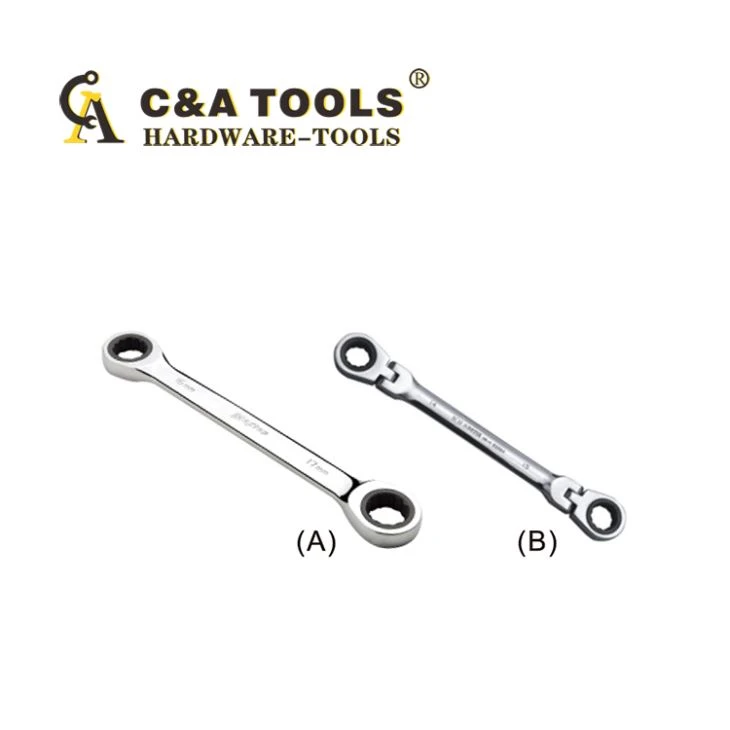
On the other hand, Ratchet Offset Ring Wrench is more focused on ease of use and efficiency. While it may not be designed to take the same level of heavy - duty impacts as a slogging wrench, it still needs to have good impact resistance to handle the normal wear and tear of regular use. The ratcheting mechanism adds a bit of complexity to the design, but modern manufacturing techniques ensure that these wrenches are still quite durable.
And then there's the T Spark Plug Wrench. This type of wrench is used for a very specific task – removing and installing spark plugs. While it may not be subjected to the same high - force impacts as other wrenches, it still needs to be impact - resistant enough to handle the twisting and turning required to loosen or tighten spark plugs. A spark plug wrench that breaks or gets damaged can cause a lot of problems, so having good impact resistance is essential.
So, how can you tell if a combination wrench has good impact resistance? Well, one way is to look at the brand and read reviews. Reputable brands usually have a track record of producing high - quality tools. You can also check the specifications provided by the manufacturer. They should give you an idea of the material, heat - treating, and other factors that affect impact resistance.
Another way is to do a simple test if possible. When you get a new wrench, give it a light tap on a hard surface (make sure it's a surface that won't damage the wrench too much). If it sounds solid and doesn't show any signs of damage, it's a good indication that it has decent impact resistance. But remember, this is just a basic test and not a substitute for proper quality control.
In conclusion, the impact resistance of combination wrenches is a crucial factor that can affect their performance and lifespan. As a supplier, I'm always looking for ways to improve the impact resistance of our wrenches. We're constantly researching new materials and manufacturing techniques to make our products even better.
If you're in the market for combination wrenches, whether it's for personal use or for your business, I encourage you to consider the impact resistance of the wrenches you're buying. It's worth investing in high - quality wrenches that can stand up to the challenges of your work environment.
If you have any questions about our combination wrenches or want to discuss your specific needs, feel free to reach out. We're here to help you find the right tools for the job. Let's get in touch and start a conversation about your wrench requirements!

References
- "Handbook of Tool and Manufacturing Engineering Knowledge", Society of Manufacturing Engineers
- "Materials Science and Engineering: An Introduction", William D. Callister Jr. and David G. Rethwisch